Tuesday, October 15, 2019

Oliver Super 55

Back in the early years of the 20th Century tractors were the “Crypto” that would make you rich and everyone wanted in on the action. The Oliver Chilled Plow works of South Bend, Indiana was no exception, and sometime in the mid 1920’s they decided that the world needed an Oliver Chilled Plow Tractor. Developing a functional machine proved to be more difficult than they anticipated and only one copy of the tractor is known to exist today.


Oliver’s lack of tractor expertise was soon overcome by the 1929 merger with the Hart-Parr , Nichols and Shepard and American Seeding companies that resulted in the formation of the Oliver Farm Equipment Co.  that was positioned to provide nearly everything a farmer needed except rain. Hart-Parr had been building tractors since 1902 and is generally credited with inventing the term “tractor”. The Oliver Corporation, as it became known in 1944, was on its way to a long career of building innovative farm machinery.


The Hart-Parr tractors evolved under the new corporation. By 1930 the two cylinder horizontal engines had been replaced with vertical four or six cylinder inline motors. By 1935 they had gone “streamlined”. It made them look spiffy, but they didn’t go any faster. A more practical innovation was the gradual replacement of steel wheels with rubber tires. A new Fleetline series was introduced in 1948. This series emphasized interchangeability of parts between the various models. Then, from 1954 to 1958 Oliver produced the “Super” series that included the model classes: 55, 66, 77, 88 and 99. 


The Super series tractors were available in both gasoline and diesel versions and the diesel version proved to be the best sellers. Innovative improvements like independent disc brakes, their “Hydra-Lectric” hydraulic system and an independent PTO were well received by Oliver buyers. A three point hitch system was offered as an option.


Oliver shipped a model 55 to the University of Nebraska where it was evaluated in Test Number 524 from September 27 to October 12, 1954 with the following results reported for the gasoline powered version. Maximum observed horsepower; drawbar, 29.6, belt, 34.39. Wheelbase: 73 inches, front and rear tread width:48 to 76 inches. Advertised speeds: first gear, 1.69 miles per hour, 2nd, 2.58, 3rd, 3.46, 4th, 5.33, 5th, 6.39, 6th, 13.18 mph. 


Oliver manufactured its own gasoline engine, a four cylinder vertical in line with the crankshaft mounted lengthwise to the tractor. The four cylinders had a bore of three and one half inches and a stroke of three and three quarters inches. Total displacement added up to 144 cubic inches. 


I photographed this 55 at the WNC Fall Harvest Days Antique Engine and Tractor Show in 2018. It was parked in an area away from most of the exhibits that is usually where items for sale are traded. There was no for sale sign or any information about it displayed. Maybe it had already been sold. It caught my eye because I can’t recall having seen a Super 55 before. 


Sources: 
https://digitalcommons.unl.edu
www.tractordata.com 
https://oliverheritage.com 
Encyclopedia of American Farm Tractors by C.H. Wendel 

Tuesday, October 1, 2019

Fairbanks-Morse Type Y-VA Engine

I missed the 2018 Foothills Antique Power Association of NC show. Rain was forecast so I opted for a show that was closer to home and scheduled for the same day. The club members put 2018 to good use and by the time the 2019 show rolled around, two Fairbanks Morse engines had been installed at the American Legion Fairgrounds site. No flies on those boys, no siree Bob. 


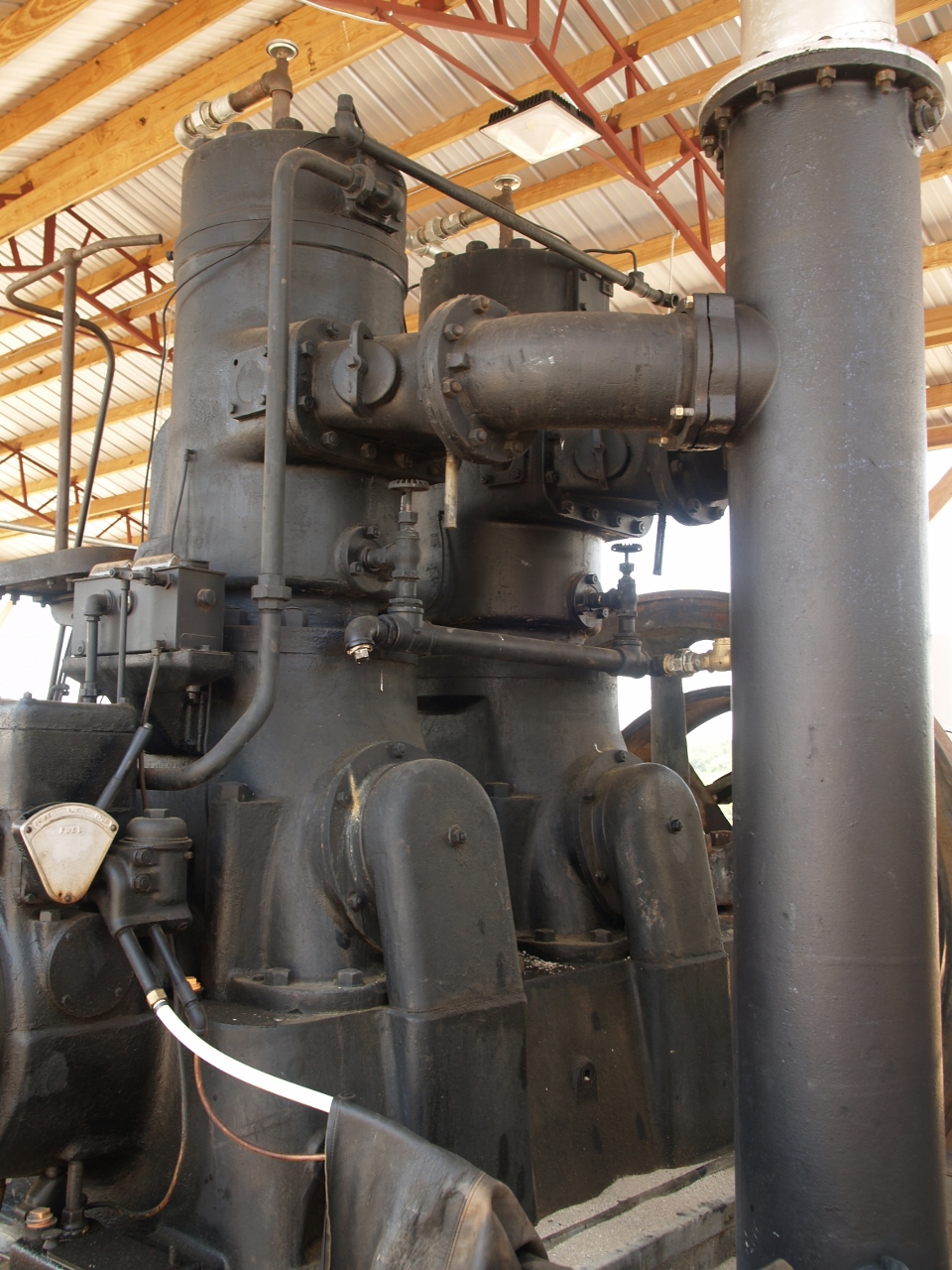
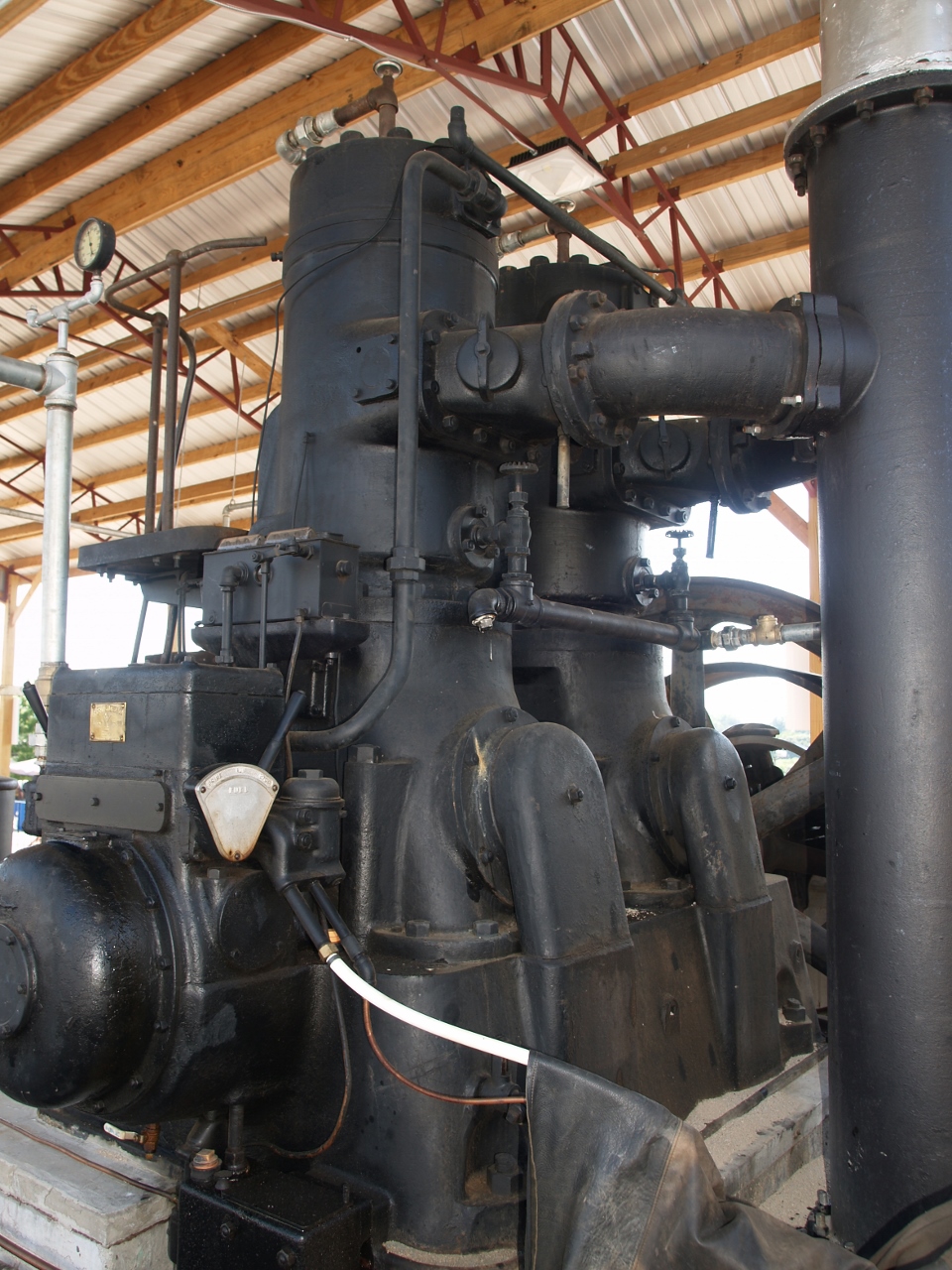
The engine that’s now being used to power their demonstration sawmill was built at the Fairbanks Morse factory at St. Paul Mn. in 1925 and shipped to a customer in Gaithersburg, Md. in May of that year. In 1928 it headed south to Orangeburg, South Carolina where it provided the motive power for a cotton gin for an unspecified number of years. In use or not it stayed there until 1987 when it changed owners again and was moved to Dacusville, SC where it was used to power a demonstration sawmill during their annual tractor and engine show. The current owners acquired it in December 2017 and moved it to the Legion Fairgrounds site at Newton, North Carolina.


To give you some idea of the effort that went into this project, consider these numbers. The type Y engine weighs a hefty 17,420 pounds. Add to that: flywheel, 2600 pounds, exhaust system, 1,500 lbs, platform and ladder, 500 lbs, clutch, 3500 lbs. Add those together for a nice round total of 25,520 pounds of antique engine.


Thaddeus Fairbanks could have told you exactly what each of those parts weighed because he designed and patented a platform scale in 1832 that became the industry standard and the best selling product of the company that he and his brother Erastus operated. In the years that followed, the E & T Fairbanks Company would sell thousands of those scales in countries around the globe. 


As the years passed, the Fairbanks Co. prospered and continued to add new products to their line. During the 1870’s, one of their dealers by the name of Charles Morse added Eclipse Windmills and pumps to their product line. They sold well and before long Mr. Morse became a partner and the name was changed to Fairbanks Morse & Co. 


During the 1890’s production expanded again with the addition of stationary engines.  Gas burning engines came first. These were typically used by oil field operations. Small engines that burned kerosene followed around 1893.  Coal gas was the next fuel in 1905, followed by a semi diesel that was ready for market in 1913. Rudolf Diesel’s American patents expired in 1912, opening the door for companies like Fairbanks Morse to sell their own versions.


The model Y was a semi-diesel that entered production in 1914. F-M offered it in a variety of power options that ranged from a one cylinder engine at thirty horsepower to a six gang engine rated at nearly 200 hp. The model Y-VA replaced the Y in 1924 and became a mainstay for applications  that required  long periods of non stop operation, like generating electricity. 


The key to this engine’s long life was the simplicity of it’s design. A two cycle, airless injection design, with few moving parts to wear out or break kept down time for repairs and maintenance to a minimum. Oldmachinepress.com has posted a sectional view of the model 32 engine that replaced the Y-VA, that gives you a better understanding of the working parts of this engine than any description that I could provide here. The Model 32 version was produced into the 1940’s and some were still in daily use into the 1970’s. 


The tag on this engine identifies it as a Y-VA rated at 120 HP running at 257 RPM when it left the factory in 1925. According to the FAPA It underwent extensive modifications in 1941 that boosted its output to 150 hp. 


The other engine in this display ( the red one ) is a 60 horsepower Fairbanks - Morse Diesel that was also moved to Hickory during 2018 - 2019. Unfortunately, that’s about all the information that they have provided about this engine. Watching these big engines run is a lot of fun and they provide an extra incentive to visit this show. For information about the 2020 event visit: www.foothillsantique,com .


Sources: 
oldmachinepress.com/2012/08/31/fairbanks-morse-model-32-stationary-engine/
www.asme.org #208 Fairbanks-Morse Y-VA engine 1924  

Sunday, September 15, 2019

Copar Panzer Model A

There are a lot of Copar Panzers still in existence. It's not unusual to see one or more examples at any show. By 1955 the factory was producing a Panzer every thirty minutes when it was running at full capacity. Nailing down hard facts about production of specific models is not always easy, however. In this post we’ll take a look at what might be one of the rarest of the rare.


The Panzer Tractor Owner’s Club’s website: www.panzertractors.com is the go-to source for information about all things Panzer since they probably have more original  documents in their collection than anybody. According to their posted history of the Model A, only about 350 were built in 1954 before production was moved to a new facility in Laurel, Md. Of that 350, they know of 50 tractors that have survived. 


James Clark was an engineer employed by Ahrendt Instrument Co. of College Park Maryland when he designed his first garden tractor, and approached his employers about building and marketing it. Ahrendt was one of the thousands of war time defense contractors who were looking for a transition to a civilian market and Clark’s tractor must have looked like a good option. 


The Panzers that were built in 1954 at the College Park Ahrendt factory were called Model A’s and were marked on the jack shaft casting with that designation and College Park cast into the iron part, as on this one. After the Laurel, Md. plant opened in January, 1955, Copar started calling them Model T 102 and the Model A was officially relegated to the dustbin of Panzer history. 


But wait, it's not that simple ( it never is ).  There might be some Laurel T 102s out there with the College Park jackshaft casting because of an existing stock of production and repair parts. If so, the casting could say College Park and the only way to know would be by checking the serial number against a reliable registry. 


With that in mind, I cranked up my computer and started looking for a serial number. On the casting along with “Model A” and “ College Park” cast into the metal is “ Serial Number” cast into the part. I ran the magnification slider up to about 75% and there it was, a blank space. It looked like at one time there had been a metal tag attached to the cast iron, but that had been a long time ago. Now there was only a rusty patch of iron. 


Soooo! All that and I can’t say for sure that this is one of the few, the proud Model A’s. Oh well, onto more definite material. Model A tractors were powered by an eight and one half horsepower model 23 Briggs and Stratton engines and came from the factory equipped with cast iron pulleys. The entire tractor was painted red. The yellow wheel accent was added after the move to Laurel, Md.  


Copar was sold to Virginia Metalcrafters located in Waynesboro, Va. in 1960 and tractors were then sold using the name Pennsylvania Lawn Products until the mid sixties, when a company called Jackson Manufacturing Co. bought them out. Production of Panzer tractors ended sometime in the early 1970’s. 


The Panzer shown in these photos was exhibited at the Steam Expo in Cumming, Ga. last November. No information about it was displayed. For information about the 2019 show visit: www.capa-ga.com .

Sources:

https://www.gasenginemagazine.com 
www.farmcollector.com  The Panzer Tractor Through the Years by Sam Moore, May 2013 
www.panzertractors.com 

Sunday, September 1, 2019

Norfolk and Western 611

If you’ve ever taken a ride on a steam excursion train you know that rail fans will wait beside the tracks, sometimes for hours, just to watch a steam locomotive go by. A better way is to be at the North Carolina Transportation Museum at Spencer when they’re having one of their “At the Throttle Steam” events, that way you can watch all day long if you want to. When I learned that the 611 was returning last September, I knew I had to be there.


Big, powerful and streamlined sleek, the N&W J Class 4-8-4’s were the crest of the last wave of the steam age. By 1941 when the first of the class was built, the technology had evolved to its highest stage of development and the craftsmen at N&W’s Roanoke, Va. Shops were among the best in the world. Norfolk and Western built 14 engines of the J Class to pull their crack passenger trains like the “Cavalier, the Tennessean, Pocahontas, and the Birmingham Special. 


At a time when most of the nation's railroads were eagerly embracing dieselization N&W chose to embark on a program to build state of the art steam locomotives at their Roanoke Shops. The first 5, numbered 600 to 604 rolled out the door between 1941 and 42. Six J-1 class engines, numbered 605 to 610 followed between 43 and 1944. The final three, 611 to 613 were built in 1950.


With a boiler operating at 300 psi to power cylinders with a bore of 27”  X stroke of 32”  that produced 80,000 # tractive effort, the J’s were the most powerful 4-8-4 engines ever built. They were designed to be capable of reaching 140 mph, that is if you could find a section of track that could accommodate a train at that speed. In actual service they did pull up to 15 passenger cars at speeds up to 110 mph.


The 611 rolled out the door at the Roanoke Shops on May 29, 1950 and onto N&W’s engine roster. It cost Norfolk and Western $251,544 to build the engine in house, which might have been a factor in the management’s decision process. The Roanoke Machine Works was founded in 1881 for the purpose of building and maintaining steam locomotives for the N&W and the Shenandoah Valley Railroad. The 60 acre facility  accommodated a foundry, machine shops, smith’s shops, erecting shops, a planing mill, lumber drying sheds, warehouses and a roundhouse. Everything necessary to maintain and build steam locomotives.


That the 611 was one of the last of the J class built, gave it an advantage as a survivor over engines with higher mileage and more hours in service. By 1958 N&W’s passenger service had completed the transition to diesel power and the remaining Js were transferred to freight service or sold as scrap. In 1959 it was chosen to pull the last of the steam railfan excursions that N&W would offer. Today it is the only surviving example of the J class engines and the star of the collection at the Virginia Museum of Transportation. 


This fall the 611 will travel north to the Strasburg Rail Road in Pennsylvania for a series of events that will run from Sept. 27 to Oct. 27 2019. You can learn more about the planned activities by visiting: www.strasburgrailroad.com. 


Sources:
https://en.wikipedia.org 
www.vmt.org 
www.jstor.org 
www.americanrails.com 


Thursday, August 15, 2019

Allis-Chalmers D 14 Rough Terrain Forklift

Here’s one for all you industrial equipment fans.
There is no shortage of rough terrain forklifts. Almost every major manufacturer has at one time or another, produced an entry for the market. Allis - Chalmers was no exception. The D 14 series of tractors aren’t particularly scarce either, so why is it so hard to find any mention of this machine online?


The D 14s were the first of the  D series that Allis built between 1957 and 1969. This run included : D 15, D 17, D 10, D12, D 19 and D 21 tractors. The D 14’s were manufactured from 1957 to 1960. Production numbers vary according to the source, from 17,474 to 23,050 according to the site you visit. The  D 14, came from the factory with a sticker that read $2,900 in 1960. 


A gasoline version of the D 14 was shipped from the West  Allis, Wisconsin plant to the University of Nebraska Lincoln for evaluation  from June 1, 1957 to June 7 and the results were published  as Test # 623. The rated load belt horsepower was recorded as 30.75, drawbar at 24.5 hp.


The test tractor was powered by an Allis built 4 cylinder, 149 cubic inch,  liquid cooled, vertical I head engine with a bore of 3 ½” and stroke of 3 ⅞”.  It was also available as an LP version. The transmission provided four forward speeds plus reverse. Advertised speeds were: 1st, 2 ⅕ mph, 2nd, 3 ¾ , 3rd, 4 ¾ , and 4th, 12 mph.    


I had just about decided that the machine I had photographed at the W.N.C. Fall Harvest  Days Show back in 2016 was some kind of an aftermarket conversion when I found an ad on an auction house website offering an A-C 160 Rough Terrain Forklift for sale. There were differences in sheet metal but overall the appearance was quite similar. The 160 tractors were distributed by Allis but built by Renault from 1970 to 1975. Based on this family resemblance, I’ve concluded that the D 14 is an all but forgotten earlier version of the rough terrain forklift line.


Sources:
www.tractordata.com 
www.rockanddirt.com 
https://digitalcommons.unl.edu 

Thursday, August 1, 2019

The Holmes Sawmill Boiler

From time to time I get an email from a visitor requesting information about a piece of machinery, and all too often there’s not much that I can offer in the way of help. Such was the case recently when I was contacted by Mark and Sally Holmes about the steam power used at their great grandfather’s sawmill. As you can see from the photos, there isn’t much to go on. No identifying numbers or other markings that might be helpful. That said, it’s an interesting project so I suggested putting out a request for information on the Mule, on the off chance that someone might see it who could provide some help. If that someone is you, leave a comment or send Sally an email at : shoeboxgenealogy@gmail.com . Now I’ll let them continue the story in their own words.


Can anyone help provide information on this 100+ year-old steam sawmill boiler?


My great grandfather, Russell Holmes, ran a logging/milling operation in Bleecker, Fulton County, New York, from 1890 until his death in 1918. After a brief stint of ownership by another lumber company, the land was reclaimed circa 1921 by the State of New York. Today, now part of the rugged Adirondack Park, the forest has reclaimed most of the evidence of the Holmes logging/milling operation. One behemoth exception is this steam boiler.


The steam sawmill was situated at the base of a mountain, receiving the timber from the higher elevations by team (vs. water). The logs were then hauled out, again by team, about five or six miles to the nearest public road.


In early May 2018, I photographed the boiler. Although I examined the boiler closely, to my amateur eye, I couldn’t spot a manufacturer’s name or any such identifying markings.


I've been told by the Bleecker Town Historian that the boiler was initially "dragged in through the woods.” This would definitely have occurred pre-1918. The historian added that, during WWII when scrap metal was in demand, men went to the old steam sawmill site. Whether or not some pieces were retrieved is not clear. But, as told by the historian and evidenced by the photos, the bulky remains of the boiler were not retrievable and thus it lies today.  


Related or not, is a "Wanted" advertisement in a 1913 New York newspaper - "Second-hand boiler about 65 horse-power (R.E. Holmes)" -- Would the boiler pictured be in that range? 


Any information – the manufacturer, possible date range of manufacture, HP capacity – any thoughts -- would be greatly appreciated.


Mark Holmes

Monday, July 15, 2019

A Spotless Engine

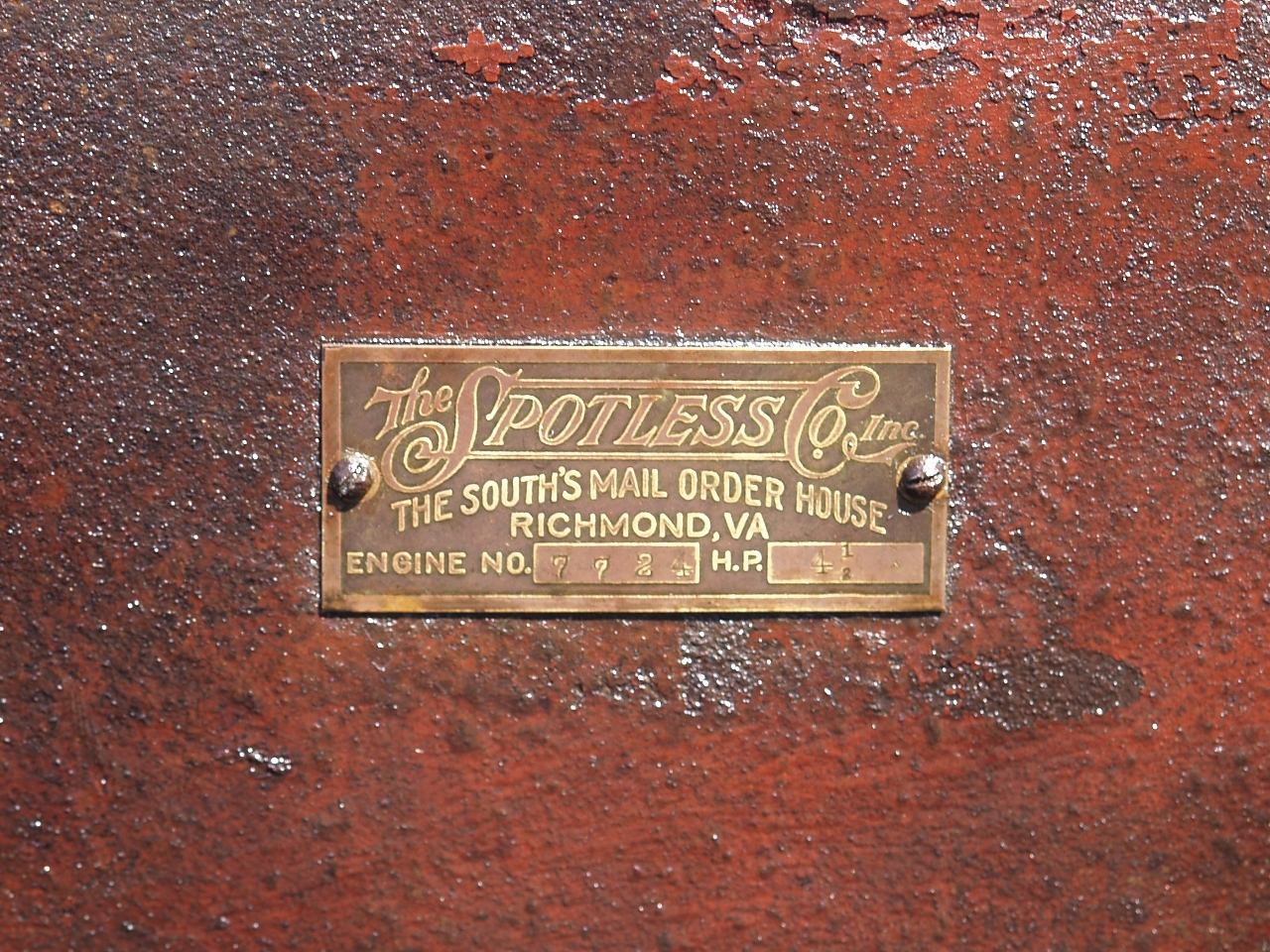
Well, maybe just a smudge here and there. I know that this is a Spotless Engine because it says so, right on the brass badge that’s fastened to the water hopper. “ The Spotless Co. Inc. The South’s Mail Order House, Richmond, Va.” It also list the horsepower as 4 ½ hp. And the engine number as 7724.


So it’s the company, not the engine that’s spotless, or so they would like their customers to believe. Spotless was a regional competitor to Sears and Roebuck that served the greater southeast. One advertisement features a map that shows shipping available to Georgia, Tennessee, Alabama, North Carolina, South Carolina, Virginia, West Virginia and Maryland. Like Sears, they sold almost anything that could be packed up and hauled to your location. The list of their inventory included such diverse items as: farm implements and buggies, barbed wire fence and rubber roofing material, stoves, ranges, sewing machines and organs. 


And engines. In 1912 they offered: 1 ½ hp, 2 ½ , 3 ½ , 4 ½ , 5, 7, 9, 12, 13 and 16 hp. Models. The 5 hp model sold for $115, the 7 hp version brought $146.50. Every engine came with a 5 year guarantee. You had a 30 day trial period to return the engine if you were not satisfied. 


Spotless sold engines but they didn’t make them, like Sears they contracted with a manufacturer to build engines for their house brand. Spotless engines were produced by the Jacobson Machine Manufacturing Co. located in Warren, Pa. They also made engines that were sold under the trade names: Bullseye, Maynard, Moody, Unito and Sturdy Jack Jr. 


An advertisement that ran in a 1914 issue of Tractor and Gas Engine Review boasted that Jacobson made an engine of every type and for every service. Air cooled, oil cooled and water cooled. Hit and miss, throttling and automatic. Stationary and portable engines. Jacobson had you covered no matter what your power needs. 


The 1912 Jacobson / Spotless engine shown here was exhibited at the Western North Carolina Fall Harvest Days Antique Engine and Tractor Show 2018. For information about the 2019 event visit: www.applecountry.org . 


Sources:
www.jacobsonengines.com 
https://books.google.com Tractor and Gas Engine Review 1914 
www.smokstak.com/forum/showthread.php?t=143185